“Choosing the right first keyboard for younger beginners can make learning music more enjoyable and less overwhelming…”
Intro : This guide is for anyone wanting to learn to play a keyboard from a very early age to later in life.
What to look out for in a beginner keyboard.
The keyboard could be light and portable, possibly have up to 61 keys, have several rhythms onboard plus demo songs, a headphone jack and good speakers.
Beginner advice section.
lightweight models
key size
portability
headphone jack
easy controls
Recommended Keyboards.
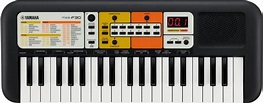
Yamaha PSS-F30
The Yamaha PSS-F30 is a compact beginner keyboard designed especially for younger children and first-time players. With 37 HQ mini keys, it is comfortable for smaller hands while still giving a piano-style playing experience.
This lightweight and portable keyboard includes 120 built-in voices, 114 accompaniment styles, and 30 built-in songs, giving beginners plenty of sounds and features to explore while learning at home or on the move.
A mini headphone jack also makes it suitable for quieter practice sessions.
Best suited for:
- young beginner players
- children with smaller hands
- portable home learning
- first-time keyboard users
Pros:
- comfortable mini keys for children
- lightweight and easy to carry
- simple beginner-friendly layout
- sturdy overall feel
Cons:
- charging socket may feel slightly delicate
- limited familiarity with some built-in songs
Approximate price:
£59
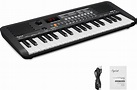
Pogolab MK-2 Mini Keyboard
The Pogolab MK-2 Mini Keyboard is an affordable starter keyboard designed for children and young beginners. With 37 keys and a compact design, it is well suited to smaller hands while remaining easy to store and transport around the home.
Despite its low price, the keyboard includes 200 instrument sounds, 200 rhythms, and 40 built-in songs, giving younger players plenty of opportunities to experiment with different sounds and styles while learning.
A headphone socket is also included, making it suitable for quieter practice sessions.
Best suited for:
- older children starting keyboard
- beginners looking for an affordable first instrument
- home learning
- children who enjoy experimenting with different sounds
Pros:
- wide variety of sounds, songs and rhythms
- compact and easy to store
- lightweight and portable
- provides plenty of entertainment for beginners
Cons:
- speaker volume can be quite quiet
- some buttons have limited or unclear functionality
Approximate price:
£39
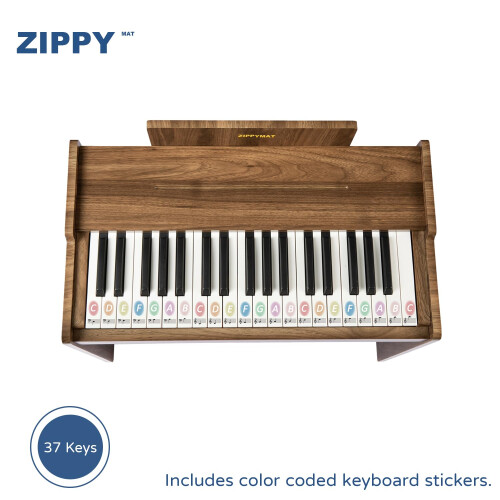
Zippy Mat Children’s Keyboard
The Zippy Mat Children’s Keyboard is designed specifically for very young beginners who are taking their first steps into music. Featuring 25 keys, a touch-sensitive control panel, built-in songs and a one-key note learning function, it offers a fun introduction to keyboard playing.
Suitable for children aged 3 years and above, the keyboard is built with durability in mind and provides good sound quality for a beginner instrument. Its simple controls make it easy for young children to explore music and develop an early interest in playing.
Best suited for:
- children aged 3 and above
- first-time music learners
- parents looking for a beginner toy keyboard
- introducing young children to music and rhythm
Pros:
- good build quality
- easy to assemble
- affordable for beginners
- good sound quality for a children’s keyboard
Cons:
- some users report issues with new batteries
- keyboard sits quite low to the ground
Approximate price:
£79
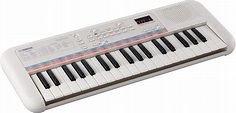
Yamaha Remie PSS-E30
The Yamaha Remie PSS-E30 is a compact beginner keyboard designed with younger players in mind. Featuring 37 high-quality mini keys, it offers a comfortable playing experience for children with smaller hands while maintaining the quality expected from Yamaha instruments.
The keyboard includes 28 accompaniment styles, 74 sound effects, and a range of built-in voices to help keep learning fun and engaging. Its lightweight and portable design makes it easy to move around the home or take to lessons, while the headphone jack allows for quieter practice sessions.
Best suited for:
- younger beginners
- children with smaller hands
- home learning
- families looking for a quality first keyboard
Pros:
- simple and not overly complicated
- excellent balance between features and ease of use
- keys are comfortable and easy to press
- good speaker volume for practice
Cons:
- USB connection can be vulnerable to damage if handled roughly
- uses a push-button power switch rather than a traditional on/off switch
Approximate price:
£56
Mamizo 61-Key Keyboard
The Mamizo 61-Key Keyboard is a full-size beginner instrument designed for children and new players who want a more realistic piano-style experience. With 61 keys and a comfortable touch response, it offers a more advanced feel compared to smaller mini keyboards while still remaining suitable for beginners.
It includes 40 demo songs, USB MIDI connectivity, a headphone socket, and 3W hi-fi sound output, making it a versatile option for home learning and early music development. Its lightweight and portable design also makes it easy to move or store when not in use.
Best suited for:
- older children and beginners
- learners progressing beyond mini keyboards
- home practice and music education
- users wanting a more “piano-like” feel
Pros:
- excellent key touch and more professional feel
- lightweight and portable for its size
- includes USB MIDI connectivity for learning/software use
Cons:
- some reports of buttons becoming unresponsive over time
- occasional missing or inconsistent support parts depending on seller
Approximate price:
£72.99
Summary.
61 keys is fine for a younger child, it provides a test to see if a child will continue learning. It provides octaves, enough for two handed playing, models often have features like, Instrumental voices, rhythm accompaniment, a headphone jack to practise quietly. You don`t need weighted keys to learn notes, chords and theory, but when playing an acoustic piano, weighted are essential. A full size keyboard could be overwhelming for a child to play, but an adult could find it better if not only to stretch on the keys.
The age to start keyboard can be anything from 3 to 83 ! and beyond, there is no age barrier.